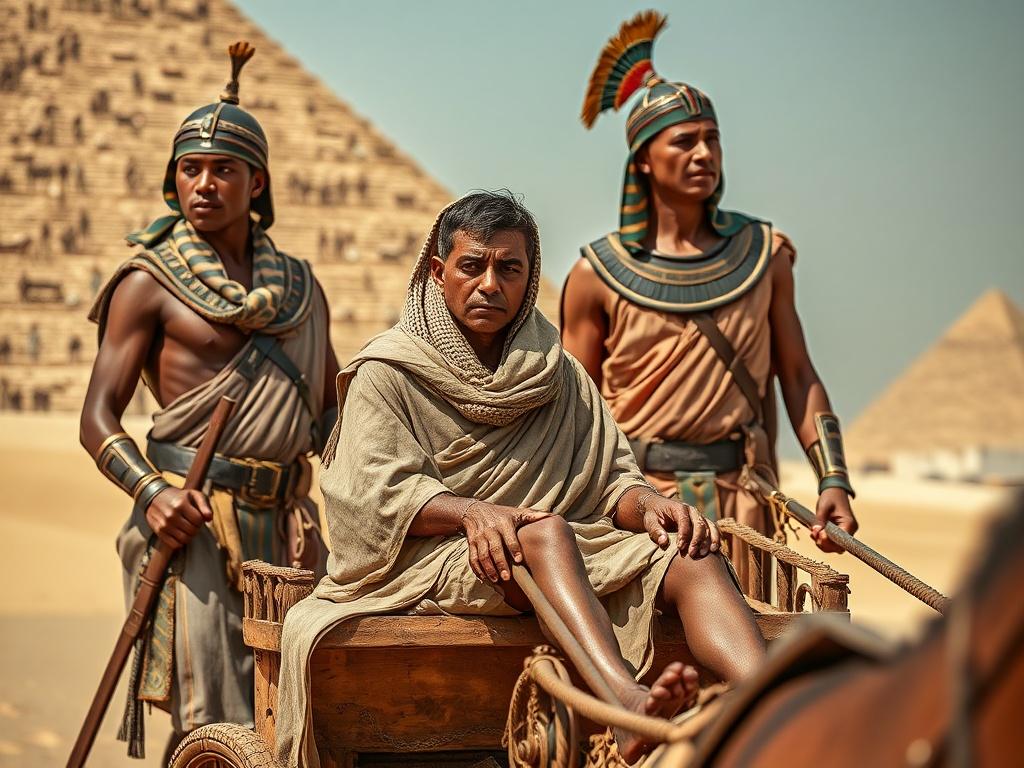
Ancient Egyptian art is often celebrated for its highly stylized nature and strict adherence to conventions, leading many to view it through an idealistic lens that emphasizes perfection in form and symbolism. Yet, this perspective overlooks the profound depth and complexity embedded in the artistic expressions of this ancient civilization. In fact, moments exist within their art where realism emerges powerfully, illustrating human experiences that resonate across time. One striking example of this can be found in the depiction of two Egyptian soldiers transporting a war captive. This scene not only conveys a historical narrative but also captures raw human emotion in a way that challenges conventional interpretations of ancient Egyptian artistry.
In our exploration of this scene, we will reevaluate the rigid conventions that have long defined ancient Egyptian art, highlighting the narrative power harnessed through emotional realism in the representation of war captives. We aim to draw attention to the artist’s role as a storyteller who skillfully infuses meaning and humanity into their work, transcending the boundaries of time and culture. By unveiling the subtleties within this poignant moment, we invite readers to reassess their understanding of ancient Egyptian art, recognizing the capabilities and insights of its creators who deftly captured the essence of the human experience amid idealized representation.
Reevaluating the conventions of ancient Egyptian art
Ancient Egyptian art is often perceived as strictly stylized and idealized, governed by rigid conventions that prioritize symbolic representation over emotional expression. Scholars have traditionally viewed the depiction of human figures through fixed rules of proportion and perspective, creating a perception that artists merely followed a strict template of representation. However, this understanding fails to acknowledge the complexity and depth of their artistic capabilities. Beneath this veneer of unyielding convention lies a rich tapestry of creativity, where skilled artisans occasionally broke away to explore the nuanced facets of human experience, such as emotions, individuality, and storytelling.
Notably, the Amarna Period is often highlighted as a groundbreaking era that pushed the boundaries of realism in ancient Egyptian art. However, the ability to convey emotion and realism predates this transformative period. The scene of transporting war captives illustrates that even in an environment with strict artistic guidelines, artists were capable of keen observation and emotional depth. They creatively used gestures, posture, and facial expressions to communicate powerful narratives that resonated with viewers, transcending the constraints of idealization. By reevaluating these conventions, we uncover a broader understanding of ancient Egyptian artists as multi-dimensional creators who captured the essence of humanity within their work.
The narrative power of emotional realism in a war scene
The scene depicting two Egyptian soldiers escorting a war captive on a chariot encapsulates the narrative power inherent in ancient Egyptian art. Traditionally, such images serve as markers of triumph, illustrating the pharaoh's dominance over foes. However, this particular depiction transcends mere victory. The emotional complexity of the captive's backward glance introduces a layer of humanity that elevates the scene from one of simple conquest to a poignant reflection on loss and separation. Viewers are not just witnessing a victory; they are invited to experience the deep sorrow and yearning reflected in the captive’s expression. This subtle yet profound storytelling element challenges the notion that ancient Egyptian art lacked emotional depth, demonstrating how it can resonate with audiences across millennia.
In this context, the emotional realism embedded within the scene serves as a powerful narrative device that draws viewers into the experience of war and its far-reaching consequences. The soldiers, exuding strength and authority, contrast with the vulnerability of the captive, whose gaze depicts an internal struggle between hope and despair. By capturing moments of raw emotion, the artist elevates the narrative, allowing the viewer to engage with the broader human experience of war. This ability to intertwine emotional realism with historical context not only enriches the artwork but also deepens our understanding of ancient Egyptian society, which was framed by conflict yet filled with complex human experiences.
Understanding the artist's role in the portrayal of human experience
Ancient Egyptian artists played a crucial role in shaping the narratives that permeated their culture. They were not merely technicians restricted by rigid conventions; they were insightful observers and storytellers who infused their work with deep meaning. In the scene depicting the transportation of a war captive, the artist made a deliberate choice to include the emotional detail of the captive's backward glance. This choice reflects an understanding of human psychology and invites viewers to connect with the subject on an emotional level. Rather than adhering strictly to the standard representation of a victorious military scene, the artist emphasized the humanity of the captive, highlighting the complexities of loss and longing.
Moreover, the artist's skill in composition and symbolism transformed a conventional military triumph into a poignant moment that resonates across time and culture. This artistic decision required not just technical prowess but also a profound sensitivity to the human experience. By capture a fleeting yet powerful emotion, the artist challenged the narrative of conquest and portrayed the realities of war, emphasizing the profound emotional toll on individuals caught in such circumstances. In doing so, ancient Egyptian artists showcased their ability to convey authentic emotions through their work, reminding us that they were far more than anonymous craftsmen—they were the custodians of human stories that continue to speak to us today.
