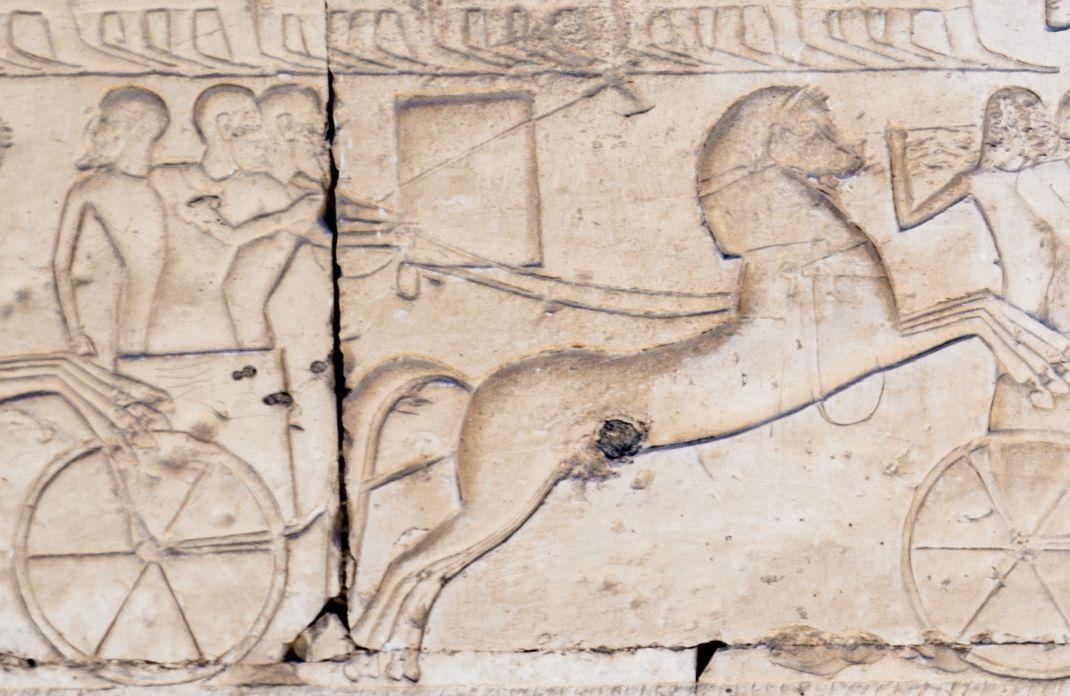
Ancient Egyptian art is often celebrated for its highly stylized and symbolic nature, bound by strict conventions that seemingly prioritize idealism over realism. For centuries, scholars and enthusiasts have viewed it through the lens of perfection, where figures adhere to rigid rules of proportion, and emotional expressions appear almost nonexistent. However, a closer examination unveils a rich tapestry of artistic expression that reveals the depth and complexity of human emotion within these captivating works. One striking example is the scene depicting the transportation of a war captive, where the interplay of triumph and vulnerability invites a reevaluation of our understanding of Egyptian artistry.
In this blog post, we will explore the extraordinary moment captured in this scene, where two Egyptian soldiers escort a captured enemy on a chariot. More than just a military victory, this powerful image conveys an emotional realism that transcends the often-idealized narratives associated with ancient art. By breaking down the strict conventions of idealism and highlighting this poignant moment of loss and longing, we aim to uncover the rich layers of meaning embedded in ancient Egyptian art while emphasizing the importance of recognizing its emotional depth in today's context.
Breaking the myth of pure idealism in ancient Egyptian art
Ancient Egyptian art is often perceived through the lens of idealism, where figures emerge in perfect form, proportions adhere to strict rules, and scenes celebrate eternal themes over transient human emotions. This rigid interpretation overlooks the profound complexity of the artistic tradition. While it's true that ancient Egyptian artists operated within a canon of proportions and symbolic representation, they often ventured beyond these constraints. Artists infused their work with human experiences and emotions, revealing a depth that challenges our understanding of their craft. The existence of emotional realism alongside idealized representations showcases the versatility of ancient Egyptian artists as both creators and storytellers.
One compelling instance where this creative latitude is evident is in scenes portraying the transportation of war captives. Though these images might initially draw attention for their narrative of conquest, a closer examination reveals the human stories woven into the artwork. Each figure is depicted with intention; soldiers embody authority and discipline while captives reflect vulnerability and yearning. Such scenes reveal that the artists made deliberate choices to encapsulate raw human emotion, demonstrating that idealism did not define their entire artistic spectrum. Instead, they skillfully threaded moments of realism into their work, challenging the myth that ancient Egyptian art followed a single, unyielding ideal.
A closer look at the emotional nuances in transporting war captives
The scene of two Egyptian soldiers escorting a war captive on a chariot captivates the viewer with its emotional depth, revealing the complex interplay between power and vulnerability. At first glance, the soldiers exude confidence, embodying the might and order of the Egyptian military. Their upright postures and firm grips on the chariot project authority and discipline, typical of victory scenes throughout ancient Egyptian art. However, it is the captive's subtle body language that truly transforms the narrative. Instead of merely representing a vanquished enemy, the captive’s backward glance evokes a poignant moment of reflection. It compels the observer to consider his internal world—one filled with sorrow, longing, and resignation.
This moment highlights the artist's ability to forge a visceral connection between the past and the present. The captive's backward gaze is not merely decorative; it serves as a powerful narrative device that speaks to universal human experiences—loss, separation, and the pain of leaving one's homeland. Rather than conforming to rigid conventions, the artist crafts a scene rich with emotional nuance, capturing the raw essence of the human condition. In doing so, the artwork transcends its historical context and serves as a reminder that beneath the veneer of conflict and conquest lies the shared experience of humanity, a theme that resonates deeply across cultures and time periods.
Why appreciating realism in ancient Egyptian art matters today
Appreciating realism in ancient Egyptian art allows us to forge a deeper connection with the past, enriching our understanding of human experiences that transcend time and culture. The emotional depth captured in scenes, such as the transporting of war captives, resonates with contemporary audiences who seek authenticity and relatability in art. By recognizing the raw emotions embedded in these ancient narratives, we can better appreciate the complexities of the human condition that remain relevant today. This acknowledgment encourages a broader dialogue about the power of art to reflect shared experiences, fostering empathy toward individuals from diverse backgrounds and eras.
Furthermore, exploring the nuances of realism in ancient Egyptian art encourages us to rethink traditional definitions of artistic expression. Instead of viewing Egyptian artists solely through the lens of idealism and strict conventions, we can appreciate their creative agency and ability to weave emotional storytelling into their work. This appreciation raises awareness of the skill and insight these artists possessed, highlighting their role as profound thinkers and observers of human life. Emphasizing the realism within ancient Egypt not only enhances our understanding of historical narrative but also inspires us to seek and celebrate emotional truth in art across all cultures and time periods.
